
I remember, some time around the age of 5 or so, my dad buying the family a Super Nintendo for Christmas. In the first month- perhaps months- “for the family” really meant something more like “for himself.”
It came bundled with Super Mario World and while my sister, Madilaine, and I were sometimes allowed to play (likely on a separate save), I recall my dad playing it obsessively all the way through to Bowser’s castle, where he ultimately got stumped. My aunt, uncle, and a half-dozen of my cousins were over to witness his descent into madness as he struggled to figure out how to take this heinous monster down. How the hell were you supposed to beat this expletive, expletive expletive anyway?
And so, he did what any rational, self-respecting person would do: he called the 1-800 number for Nintendo support which he found in the game’s physical, multi-page manual (’twas was a different time then). Ashamedly, my cousins, Maddie, and I attempted to interject the number wasn’t intended for support in terms of instruction on how to beat the game or its bosses but he was in a rage and was not about to quit. So some of my cousins jumped in to try to figure out the mechanic, one after another, while my dad waited on hold for probably a half hour, growing angrier by the minute. My cousins had no prior knowledge of how to obtain victory as they were the proud owners of a Sega Genesis and innumerable awesome games for it (Lucky!). If they’d succeeded, he’d surely have been even more pissed.
The customer service reps for Nintendo tried to explain he’d reached the wrong department — they were product support, you see, able to answer technical questions related to use of the hardware and were unable to answer gameplay-related questions — and he was transferred around a few times before reaching a savior willing to explain to him the method to beat Bowser, if albeit reluctantly since this was well outside the scope of his job.
The trick was, you needed to jump on top of the enemies Bowser would throw out of his ship, grab a hold of them and toss them up high enough to hit Bowser over the head to do damage. This was the revelation my dad needed to get past this blocker and to feel the overwhelming sense of relief and accomplishment at having finally beaten the final boss and completed the game. This was the culmination of all his frustration and countless hours spent speedily platforming, collecting coins and items, figuring out puzzles, dodging (and so often failing to dodge) enemies, restarting levels and reverting to checkpoints. Well, was he ever pissed to realize this journey hadn’t ended once he beat Bowser, though for him, as much as I can recall, he’d achieved all he set out to do in Super Mario World and never ventured further on. The End credits signified the end.
It was game on for Maddie and I; the Super Nintendo was pretty much ours from then on. My mom limited our game time but we got to play a significant amount of Super Mario World on our own, and it was great. We especially loved donning the cape and most of all, the ghost house levels. Sometime later a friend of our family, babysitting us one night at her house, showed us the depth of the Star Road levels and all that extended beyond the Bowser fight. There was nothing quite like the rush of endorphins when finding out that the game held an entire secret world and the notion that so much could lie beyond what a game projected on its surface. What is now considered downloadable, add-on content (“DLC”) then was included by the developers as part of the package, to surprise and delight players well beyond the final boss fight. Realizing this hidden world existed and that it contained such a wide variety of new and interesting levels and gameplay mechanics, I was mesmerized and could barely contain my giddiness at the thought of what may yet remain to uncover.
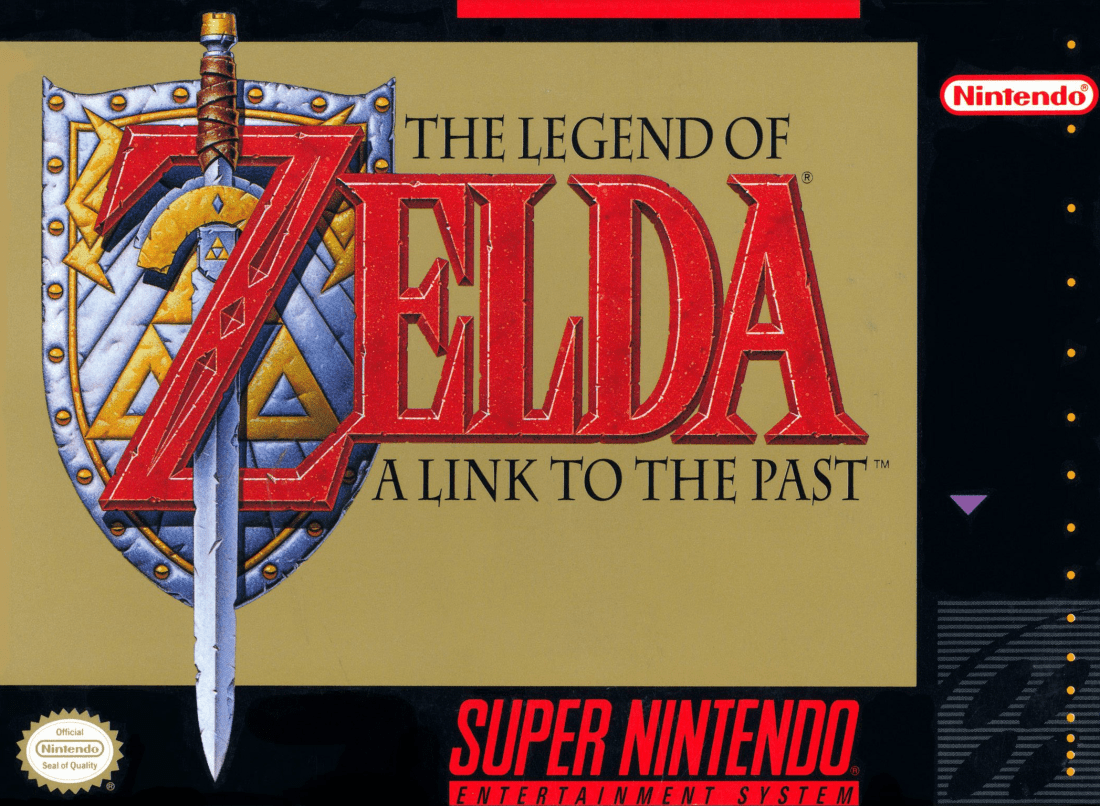
Sometime later we’d moved and I’d made a new friend in 1st or 2nd grade, named Jeff Potts. And Jeff Potts owned a Super Nintendo and a heap of games for it, including a bunch of titles I’d never been allowed to pick up when visiting our local used games shop- either because of violent content or price- like: Mortal Kombat and Mortal Kombat II, Street Fighter II Turbo, Super Mario RPG, The Teenage Mutant Ninja Turtles: Turtles in Time, and The Legend of Zelda: A Link to the Past. I dabbled when at his house, but it wasn’t until later that I received the full benefit of his friendship.
My dad had purchased a Sony Playstation for Christmas, which meant I could take over temporary ownership of the Super Nintendo upstairs, in my own room. Years of family nights playing Mario Paint and timed sessions swatting flies in that game had evolved to bowling in 3D in our living room. Jeff and his brother had upgraded by then to the Nintendo 64 and were mesmerized by Star Fox and Goldeneye, which meant I could freely borrow picks from their SNES collection for fairly open-ended periods of time.
I was overwhelmed with options. I tried them all, then jumped back and forth between them, rapidly switching out cartridges and blowing dust out of them whenever necessary. There were hidden characters and levels to obtain in Mortal Kombat, countless special moves and fatalities to learn. There were mechanics I’d never before encountered in Super Mario RPG (“turn-based combat, what is this?”). Super Mario World remained challenging in its later levels and I’d still not completed it 100%. These were exciting times.
The Legend of Zelda: A Link to the Past was… interesting… but slow to start. This top-down view was pretty strange. Why was there so much text to read, at first? Where was I supposed to go once I’d been spat out into the world following the intro? Sure there were markers, but there were so many interesting things along the way that distracted me and pulled me away from my mission. What was my mission, really, anyway? Back to fighting games for a while, and Crash Bandicoot and Demo discs whenever possible, as my time on the Playstation in the living room was limited.
Around this time, I frequented the local grocery store. By frequented, I do mean I was there almost every day of the week, either with my mom gathering food for our home, or for my mom grabbing various items needed at our family’s restaurant. I began to notice Gaming Magazines and Guides in the Periodicals section of the store. Tips & Tricks offered codes, cheats, and maps for games and revealed secrets. GamePro offered previews and reviews. I was fascinated most of all by the codes, special items and their locations, special moves, and secret worlds hidden within games and revealed inside the pages of these magazines and guides.
One day, I noticed an entire issue devoted to A Link to the Past. On the front, there were promises of full maps and locations, guidance for enemy encounters, and so much more. I flipped through the pages in awe. The maps and the item descriptions, and the sheer volume of tactical information contained therein caused my neurons to fire wildly. I’d seen the magazines before and I’d tried a few codes here and there, but this was a literal game changer for me. I begged my mom to buy it but her answer was “no.” I was crushed. On some subsequent visit, I’d won out and the guide ended up in our cart.
Something about the fact that a guide existed for this game suggested a level of depth unimaginable beforehand, that there was so much to uncover. It was time to get home and delve into every nook and cranny, to absorb the lore and the art and the wondrous design. I consumed every word, picture, and description and transcribed it onto my DNA. There were secrets to uncover, items and chests I could see but not yet obtain, dungeons to explore. I could encounter a puzzle in the game world and test solutions on my own, and was assured I’d never be stumped with the answers at my fingertips. I was empowered to learn about hidden secrets I never would have uncovered within the game without an inkling of prior knowledge; I was absolutely hooked.
The use of the guide helped to significantly enhance the experience of playing through the game, its very existence highlighting the fact that this game held numerous and powerful secrets. It didn’t feel like cheating to have the extra assistance, the way that the use of literal “cheat codes” sometimes did. Using the guide simply helped me to have a point of reference when and if I was stumped, and kept me engaged at times when I’d reached a point of boredom or uncertainty about continuing. This enhancement and elevated level of engagement with The Legend of Zelda: A Link to the Past, in addition to its story and design, ensured that it would become and remain my favorite game into adulthood.
Today, most of my favorite games are sprawling RPGs and “Metroidvanias” with “hub and spoke” design mechanics and hidden areas unlocked with special items, the kinds of games that almost require the use of a guide to learn all its secrets, at once overwhelming and rewarding, much like A Link to the Past was to me then.
Several years ago I’d purchased a Super Nintendo at a flea market but found myself priced out of most of my all-time favorite games. A Link to the Past was going for something like $75-95 at the time, which was simply not feasible then. In recent years I’ve replayed A Link to the Past in various forms- emulated on Android, on the Wii U, and again on the SNES classic (when I was able to finally obtain one, after the first shipment had sold out entirely and my first several attempts to track one down had been futile). Friends seemed surprised when I shared I was currently replaying it and even more so when I told them it was probably my favorite game, full stop. This, in the age of Call of Duty, Destiny, MOBAs, and persistent, online worlds-type games-as-a-service. But I’m not alone in my high regard for it. Game Informer ranked A Link to the Past #1 on their top 300 Greatest Games of All Time in 2018.
 edifi Gaming